
Is Your Ford's A/C Ready for Oregon Summer? 5 Signs It Needs Service
Oregon drivers know that summer doesn'tarrive all at once.
One week you're driving through cool,
misty mornings, and the next you're rolling down Highway 26 under bright
sunshine with the cabin heating up faster than expected. It's often during that
first stretch of warm weather that drivers discover their air conditioning
isn't working quite like it used to.
Maybe the vents are blowing cool, but
not cold. Maybe the airflow feels weaker than last year. Or perhaps there's an
odd smell every time you switch the A/C on.
These are all early signs that your
climate control system needs attention.

Fortunately, most A/C problems don't
appear overnight. They develop gradually, giving you plenty of opportunities to
address them before they become expensive repairs.
At Doherty Ford in Forest Grove, we
help drivers throughout Washington County prepare their vehicles for every
season with our comprehensive Ford essential maintenance guide.
Let's look at what causes vehicle A/C
problems, the warning signs you shouldn't ignore, and why preventive
maintenance can help keep your Ford performing at its best.
Why Your A/C Works Harder Than You
Think
Most people think their vehicle's air
conditioner creates cold air.
It actually does something much more
impressive; it removes heat and humidity from the air already inside your
vehicle.
Your A/C system continuously circulates
refrigerant through several components, including the compressor, condenser,
evaporator, and expansion valve. As refrigerant changes between liquid and gas,
it absorbs heat from your cabin before releasing it outside the vehicle.
When every component is operating
correctly, the process happens almost instantly.
But if refrigerant levels drop, airflow
becomes restricted, or one component begins to wear out,the entire system has to work harder just to maintain comfortable temperatures.
That's why even a small issue can
quickly become noticeable once warmer weather arrives.
Why Isn't My Ford's A/C Blowing Cold
Air?
One of the most common questions
drivers ask is why their air conditioner suddenly starts blowing warm air.
In many cases, the issue isn't the
temperature outside, it's a problem within the system itself.
Low refrigerant is one of the most
common causes. Since refrigerant travels through a sealed system, it doesn't
simply get "used up." If levels are low,
there's usually a leak that should be inspected before additional refrigerant
is added.
Another possibility is restricted
airflow. A dirty cabin air filter can significantly reduce the amount of cooled
air entering your cabin, making it feel like the A/C isn't working even when
it's producing cold air.
Mechanical components can also wear over time. Compressors, cooling fans, sensors,
and electrical connections all play important roles in keeping your A/C
operating efficiently. Because heavy summer A/C use increases electrical
demand, checking our battery service and repair guide can ensure your electrical system supports peak compressor performance
without unexpected voltage drops.
Professional diagnostics help identify
the exact cause, preventing unnecessary repairs and ensuring the correct
solution the first time.
5 Signs Your Ford May Need A/C Service
Your air conditioning system usually
provides several warning signs before it stops working completely.
Watch for symptoms such as:
·
Warm or inconsistent air from the vents
·
Weak airflow, even with the fan on high
·
Musty odors when the A/C is running
·
Clicking, squealing, or rattling noises
·
Longer cooling times than usual
These issues may seem minor initially, but ignoring them can place additional
strain on expensive components like the compressor.
Scheduling service early often prevents
larger repairs later.
Can a Dirty Cabin Air Filter Reduce
Cooling?
Your cabin air filter serves as the
first line of defense against dust, pollen, leaves, and airborne debris
entering your vehicle.
As the filter becomes clogged, less air
can pass through the evaporator, reducing the amount of cooled air reaching
your cabin.
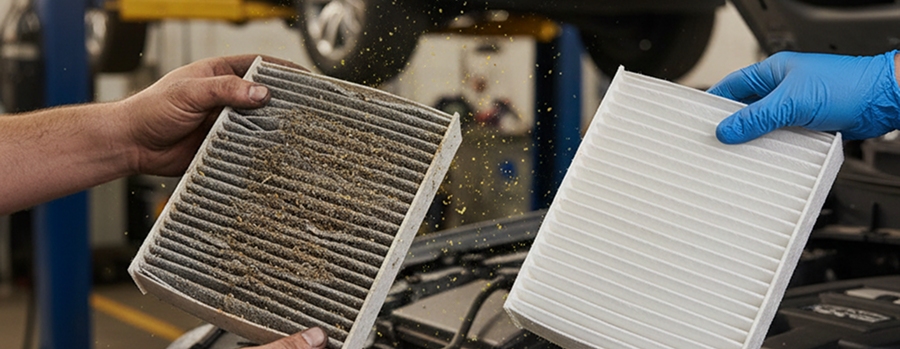
Many drivers mistake this for an A/C
problem when the real culprit is simply restricted airflow.
Replacing the cabin air filter is one
of the quickest ways to restore airflow while improving air quality inside your
vehicle.
If you've noticed increased allergy
symptoms while driving or your vents don't seem as powerful as they once were,
your cabin filter may be overdue for replacement.
Does Your Ford Need an A/C Recharge?
One of the biggest misconceptions about
automotive air conditioning is that simply adding more refrigerant will solve
every cooling problem.
In reality, your Ford's A/C system is
completely sealed. Refrigerant isn't consumed during normal operation, so if
levels are low, there's usually a small leak somewhere in the system.
While an A/C recharge restores
refrigerant to the proper level, it doesn't repair damaged hoses, worn seals,
or leaking components. Without identifying the source of the leak, the problem
is likely to return.
That's why professional technicians
perform a complete inspection before recommending a recharge. By checking
system pressures, inspecting for leaks, and
verifying component performance, they can determine whether a simple recharge
is all that's needed or if additional repairs are required.
What Happens During a Professional A/C
Inspection?
Professional air conditioning service
involves much more than adding refrigerant. Every component of the system is
carefully evaluated to ensure it's operating as designed.
During a typical inspection,
technicians will:
·
Check refrigerant pressure and overall
system performance.
·
Inspect hoses, fittings, and seals for
leaks or damage.
·
Test the compressor, condenser, and
cooling fans.
·
Evaluate cabin airflow and inspect the
cabin air filter.
·
Verify the system
delivers the proper vent temperature.
This thorough approach helps identify
small issues before they become costly repairs, giving you confidence that your
climate control system is ready for the warmer months ahead.
Simple Ways to Help Your A/C Perform
Better
While professional maintenance is
essential, a few simple habits can help keep your A/C system operating
efficiently throughout the year.
·
Run your A/C regularly, even during
cooler months. This helps keep internal seals lubricated and prevents
refrigerant leaks.
·
Replace your cabin air filter and
review our oil change and service guide to keep both your cabin airflow and engine thermals operating
efficiently under summer heat.
·
Schedule an inspection if cooling
performance begins to decline instead of waiting for the system to stop working
altogether.
These small preventive steps can extend
the life of your air conditioning system while helping maintain consistent
cabin comfort.
Routine maintenance also gives
technicians the opportunity to inspect other important safety components.
Before embarking on summer highway drives, ensure your vehicle's stopping power
is optimized with our brake repair and service guide and verify proper tread wear through our tire and alignment service guide, ensuring your Ford is completely ready for everything from your daily
commute around Forest Grove to weekend trips along the Oregon Coast.
Stay Comfortable Wherever the Road
Takes You
Your air conditioning system does more
than keep you comfortable—it helps make every drive more enjoyable, especially
during warmer summer afternoons. By staying proactive with routine inspections
and addressing small concerns early, you can avoid unexpected breakdowns and
enjoy reliable cooling whenever you need it.
If your Ford's A/C isn't performing the
way it should, let the experienced team at Doherty Ford help. Our
factory-trained technicians use genuine Ford parts and professional diagnostic
equipment to identify the problem accurately and recommend the right solution.
Schedule your Ford A/C inspection with Doherty Ford today and enjoy cool, comfortable driving all summer long.