
What Does the Ford AdvanceTrac Service Light Mean?
Modern Ford vehicles are engineered to quietly manage traction, stability, and control in the background, especially when road conditions change without warning. Most of the time, systems like AdvanceTrac do their job so seamlessly that drivers hardly notice them at all.
That’s why seeing a service AdvanceTrac message pop up on
your dashboard can feel incredibly unexpected.
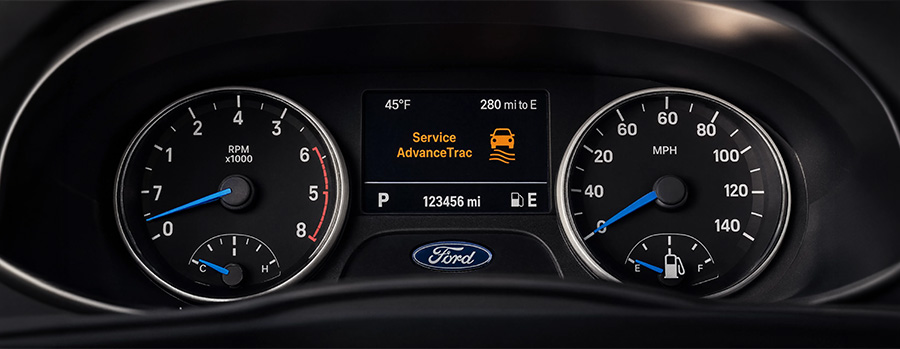
If you have found yourself wondering what does service AdvanceTrac
mean, the short answer is that your vehicle has detected a software or
mechanical fault and has temporarily disabled its electronic stability and
traction control safety nets to prevent further vehicle conflict.
At Doherty Ford, we believe understanding the root cause
of a dashboard warning is just as important as fixing it. This guide walks you
through exactly how this traction suite operates,
the most common reasons your service Advancetrac Ford alert may trigger, and
the troubleshooting steps required to restore your confidence on the road.
What is
Ford AdvanceTrac?
AdvanceTrac is a sophisticated software system that
coordinates multiple mechanical operations across your vehicle. It serves as
Ford’s proprietary electronic stability control (ESC) framework, designed to
maintain your vehicle's intended path and tire grip during adverse weather
conditions or sudden emergency maneuvers.
The system relies on a constant stream of data from a high-speed network of sensors to manage three distinct safety functions simultaneously:
- Traction Control System (TCS): Monitors wheel spin during acceleration. If one tire loses grip and spins faster than the others on a slick surface, the system applies precise brake pressure to that specific wheel or temporarily scales back engine power to regain traction.
-
Electronic Stability Control (ESC): Compares
your intended path (tracked by your steering wheel position) with the vehicle’s
actual path (tracked by lateral acceleration and rotation). If a discrepancy is
found, such as a front-wheel skid, it brakes individual wheels to pull the
vehicle back into line.
- Roll Stability Control (RSC): Utilizing a specialized gyroscopic sensor, RSC monitors the vehicle's physical roll rate. This is particularly critical for protecting vehicles when navigating sharp turns or handling sudden lane changes on local highways.
Common
Mechanical Failures Which Trigger Ford AdvanceTrac
When a component within this interconnected safety network fails, the main control computer immediately shuts down the stability suite and illuminates the dashboard warning indicator.
|
Component
|
Role in the Vehicle
|
Common Failure Symptoms
|
|
Wheel Speed Sensors
|
Measures the exact RPM of each tire.
|
Light triggers after hitting a deep pothole or driving
through deep mud.
|
|
Steering Angle Sensor
|
Tracks the direction the front wheels are pointed.
|
Light appears after an alignment shift or clipping a
curb on Pacific Ave.
|
|
Clock Spring
|
Connects steering wheel electronics to the main
steering column.
|
Light is accompanied by non-working steering wheel
buttons or a dead horn.
|
|
ABS Tone Ring
|
The physical "teeth" on the wheel hub that
the sensor reads.
|
Intermittent warning light that triggers only at
specific highway speeds.
|
|
Yaw Rate Sensor
|
Measures the actual "spin" or rotational
movement of the car.
|
Light appears suddenly during sharp cornering or heavy
braking maneuvers.
|
Basic
Troubleshooting for the AdvanceTrac Light
If your warning light is currently active, following a
structured diagnostic path can help you isolate the issue before assuming a
major mechanical replacement is necessary.
Step 1: Check Your Wheel Alignment
AdvanceTrac requires the
steering wheel to be perfectly centered when the vehicle is tracking straight
down the road. If you recently sustained a hard impact against a hidden pothole
and your steering wheel is now slightly "cocked" to the left or
right, the computer will interpret this as a permanent skid and disable the
system for safety.
Keeping a close eye on your
tracking and reviewing a comprehensive tire and wheel alignment guide can help
you determine if misaligned suspension geometry is throwing off your sensors.
Step 2: Inspect Battery Health and Voltage
Modern Ford platforms are
exceptionally sensitive to structural voltage drops. If a battery is more than
three years old, it may provide just enough cranking amps to turn the engine
over but fail to maintain the steady 12.6V required for the electronic control
modules to initialize properly.
If you notice slow engine
starts or flickering cabin displays, it is wise to look into what is involved in professional battery testing to clear
out low-voltage system faults.
Step 3: Execute a System "Soft Reset"
Occasionally, an exterior sensor may experience a
temporary digital glitch due to extreme temperature swings or standing water
splashing into the wheel wells.
If you want to know how to reset AdvanceTrac to see if the
fault is temporary, follow these steps:
1.
Pull over to a safe, level location and park the vehicle.
2.
Turn off the engine completely, remove the key (if
applicable), and let the vehicle sit undisturbed for roughly 10 minutes to
allow the onboard modules to power down.
3.
Restart the engine and drive safely above 20 mph for at
least a quarter-mile.
If the warning light clears, it was likely a transient
sensor glitch. If the light persists, the fault is "hard" and
requires professional diagnostic equipment to clear.
Local Causes for System Failure
The unique climate and varied terrain of Washington County play a direct role in electronic stability malfunctions. While Ford safety systems are built to be remarkably robust, our local Pacific Northwest driving conditions accelerate specific types of mechanical wear:
-
Persistent Moisture and Wire Oxidation: Living
in an environment with high humidity, damp mornings, and heavy seasonal
rainfall creates a prime environment for electrical oxidation. Grounding wires
and sensor connectors located near the wheel wells are prone to developing
corrosion. This creates high electrical resistance in the circuit, which the
vehicle immediately flags as a system fault.
- Gravel Road and Undercarriage Debris: Driving out toward agricultural fields or traversing the rugged logging roads near Gales Creek and Timber exposes your undercarriage to thick mud, packed clay, and small rocks. If a wheel speed sensor becomes heavily caked in wet debris or its fragile wiring harness is snagged by trail brush, the warning light will trigger instantly.
- Braking and Suspension Strain: The constant braking required to navigate wet mountain passes or stop-and-go morning commutes into Portland places extra thermal and physical stress on your wheel hubs. If your underlying braking hardware is failing, it can disrupt the ABS tone rings. Monitoring early warning signs via a detailed brake repair and service guide is a smart way to ensure your primary stopping components aren't dragging your electronic safety systems down with them.
Can You Safely Drive with the AdvanceTrac Light On?
Technically, your vehicle is still drivable. Your core
engine components, transmission, and standard hydraulic brakes will continue to
function normally.

However, driving without these safety nets introduces distinct risks:
-
No Automated Emergency Correction: In a
panic-swerve situation on a slick stretch of Highway 47, the electronic
stability framework will not activate to help you stay within your driving
lane.
-
Increased Hydroplaning Vulnerability: During
our intense winter slush storms or torrential autumn downpours, your traction
control will be unable to manage sudden wheel spin on pooling water.
-
Limp Mode Safety Interventions: In
certain Ford models, a prolonged AdvanceTrac electronic fault can trick the
main computer into triggering a safety "Limp Home Mode," which
heavily restricts your vehicle's speed to prevent mechanical damage.
Warning: If your dashboard's alert is accompanied by a flashing "Red Brake Light”, your primary hydraulic braking system may be severely compromised. Pull over safely and immediately call for assistance.
Expert Diagnostics for a Safer Drive
To truly resolve an underlying traction fault without
resorting to expensive guesswork, the team at Doherty Ford utilizes the
specialized Ford Integrated Diagnostic System (IDS).
This professional-grade equipment allows our
factory-trained technicians to read manufacture-specific fault codes, monitor
live sensor readouts as the wheels rotate, and precisely recalibrate sensitive
steering components.
Integrating this level of diagnostic care directly into your comprehensive car preventive maintenance strategy ensures that you only pay for the exact repair your vehicle needs. Your safety suite is a vital driving asset; addressing this dashboard warning now ensures your Ford remains perfectly stable and responsive during the next sudden Pacific Northwest downpour.