
How to Get More Life Out of Your Car Battery: 8 Essential Maintenance Tips
A reliable car battery can make the difference between starting your vehicle without a second thought and being stuck in your driveway waiting for a jump-start.
Although batteries naturally lose
capacity as they age, certain driving habits and maintenance practices can
accelerate that process. Repeated short journeys, electrical drain, and extreme
temperatures can all affect battery performance.
The good news? You don't need complicated
tools or extensive automotive knowledge to take better care of your battery.

Regular inspections, clean electrical
connections, and a properly functioning charging system can help keep your
vehicle ready for everyday driving.
At Doherty Ford, we understand the
importance of dependable transportation. Whether you're navigating Forest
Grove's local roads, commuting toward Hillsboro, or heading out along US-26,
these eight tips can help you maintain your battery and reduce the likelihood
of unexpected starting problems.
1. Why Should You Inspect Your Car Battery Regularly?
Your battery can gradually lose
performance without showing obvious signs of trouble. Routine inspections help
identify potential problems before they affect your ability to start the
vehicle.
Begin by checking for corrosion around
the battery terminals, loose cable connections, or visible damage to the
battery case. Pay attention to changes in starting performance, too. An engine
that cranks more slowly than usual may indicate a weakening battery or another
starting-system issue.
Many conventional car batteries last
approximately three to five years, although actual lifespan varies with battery
design, operating conditions, and maintenance.
Maintenance Tip: If your battery is several years old, ask a technician to
test its condition during routine service. Identifying a weak battery early can
help you plan for replacement before it fails unexpectedly.
2. Do Frequent Short Drives Affect Battery Performance?
Your everyday driving routine can
influence how effectively your battery maintains its charge.
Starting an engine requires a substantial
burst of electrical power. Once the engine is running, the alternator helps
replenish that energy. However, repeated short trips may not provide enough
charging time to compensate for the energy used during starting.
This can become more noticeable when you
frequently use electrical accessories or make several brief journeys throughout
the day.
To help maintain a healthy battery
charge:
·
Combine errands when it
makes sense to do so.
·
Avoid repeatedly starting
the vehicle for very short journeys when alternatives are practical.
·
Use a compatible battery
maintainer if your vehicle will remain parked for an extended period.
·
Have the battery tested
if it regularly struggles to hold a charge.
If your battery continues losing power,
don't assume that driving longer will solve the problem. A weak battery or
charging-system fault may require professional attention.
3. How Do Clean Battery Connections Improve Reliability?
Even a healthy battery can struggle to
deliver power when its electrical connections are compromised.
Battery terminals can accumulate
corrosion over time, creating resistance that interferes with the flow of
electricity. This may contribute to difficult starting, intermittent electrical
problems, or unreliable connections.
During routine inspections, look for
powdery deposits around the terminals, damaged cables, or connections that
appear loose.
If corrosion develops, have the terminals
cleaned and inspected using the appropriate safety procedures. Avoid handling
battery deposits with bare hands, and never allow metal tools to bridge the
positive and negative terminals.
Keeping connections clean and secure
helps maintain reliable electrical contact. It also gives technicians an
opportunity to identify damaged cables or other problems that could affect
starting performance.
4. How Does Oregon Weather Affect Car Battery Life?
Your vehicle's battery must cope with
changing temperatures throughout the year. In Forest Grove, colder winter
mornings can make starting more demanding.
Low temperatures reduce the amount of
power a battery can deliver, while the engine may require more power to turn
over. An aging battery that performs adequately during mild weather may
struggle when temperatures fall.
You can take several practical steps to
prepare for colder conditions:
·
Park in a garage when
possible.
·
Check battery condition
before winter arrives.
·
Keep terminals and
electrical connections in good condition.
·
Address slow starting
before it becomes a recurring problem.
·
Have the charging system
inspected if the battery repeatedly loses charge.
Battery maintenance matters year-round,
but a pre-winter battery test can be particularly useful if your vehicle's
battery is approaching the end of its expected service life.
5. What Causes a Car Battery to Drain While Parked?
Your battery can lose charge even when
the engine isn't running.
Leaving the headlights or interior lights
switched on is an obvious example. However, certain aftermarket accessories and
malfunctioning electrical components can continue drawing power after the
vehicle has been switched off.
To reduce the risk of an unexpectedly
dead battery:
·
Check that interior
lights switch off when doors close.
·
Turn off electrical
accessories when they're no longer needed.
·
Disconnect accessories
that continue drawing power while parked.
·
Avoid prolonged use of
the audio system with the engine off.
·
Investigate repeated
battery failures instead of relying on frequent jump-starts.
Modern vehicles may have systems that
remain active briefly after the engine is switched off, so not every electrical
draw indicates a problem.
However, if your vehicle repeatedly
struggles to start after being parked overnight, a technician can test for
excessive electrical drain and identify its source.
6. Which Symptoms Suggest Your Battery Is Wearing Out?
A failing battery doesn't always stop
working without warning. Recognizing early symptoms can help you arrange
service before the vehicle becomes difficult to start.
Look out for these indicators:
·
Sluggish starting: The engine takes longer than usual to crank.
·
Clicking during startup: You hear clicking when turning the ignition or pressing the
start button.
·
Unusual lighting
behavior: Headlights or interior lights appear
dim.
·
Dashboard warnings: A battery-shaped warning light remains illuminated.
·
Recurring starting
difficulties: The vehicle needs repeated jump-starts.
·
Electrical issues: Accessories behave unpredictably.
·
Physical deterioration: The battery case appears swollen, cracked, or damaged.
These symptoms can also result from
alternator, starter, wiring, or connection problems. Proper testing helps
determine whether the battery needs replacement or another component requires
repair.
If you notice a leaking, swollen, or
visibly damaged battery, avoid handling it and seek professional assistance.
7. Why Should You Check Your Vehicle's Charging System?
Replacing an old battery won't
necessarily resolve every starting problem. Your vehicle's charging system also
needs to function correctly.
The alternator generates electrical power
while the engine runs and helps recharge the battery. If it isn't working
properly, the battery may gradually lose its charge even when the battery
itself is relatively new.
Possible warning signs include a battery
warning light while driving, repeated battery discharge, flickering headlights,
or unusual electrical behavior.
If these symptoms appear, have the
battery, alternator, wiring, and related components inspected.
A charging-system test can help identify
whether the issue involves the battery itself or the system responsible for
keeping it charged. Addressing the underlying fault can also help prevent
unnecessary battery replacements.
8. Can Scheduled Ford Service Help Prevent Battery Problems?
Routine vehicle maintenance provides an
opportunity to identify battery issues before they interrupt your plans.
During a battery and electrical-system
inspection, a technician may assess the battery's starting performance, check
its terminals and cables, evaluate charging-system operation, and look for
signs of corrosion or physical damage.
If replacement becomes necessary,
choosing a battery that meets your vehicle's specifications is essential.
Depending on the model, your Ford may also require specific battery monitoring
system procedures following installation.
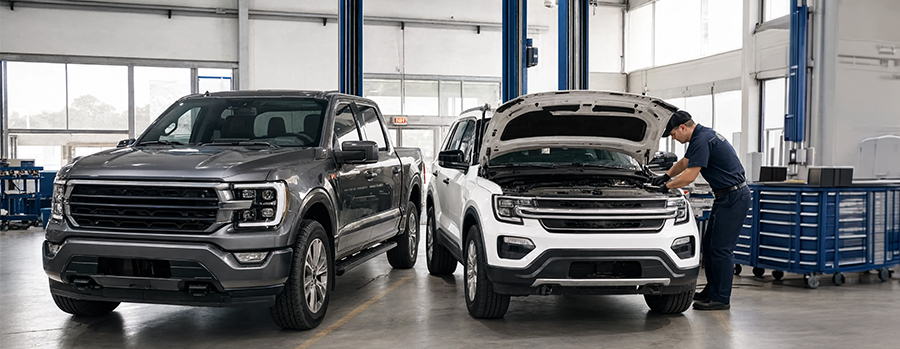
Following the manufacturer's
recommendations helps ensure the replacement battery and charging system
operate as intended.
Regular servicing won't stop a battery
from eventually wearing out, but it can help identify deterioration, uncover
charging faults, and reduce the likelihood of avoidable starting problems.
A Battery Care Checklist for Forest Grove Drivers
A few simple checks can help you stay
ahead of potential battery trouble.
|
Maintenance Task
|
When to Consider It
|
Benefit
|
|
Visual battery inspection
|
During routine maintenance
|
Identifies visible damage and corrosion
|
|
Battery condition test
|
Periodically, particularly as the battery ages
|
Helps identify declining performance
|
|
Terminal and cable inspection
|
During scheduled service
|
Helps maintain reliable connections
|
|
Charging-system test
|
When warning signs or test results indicate a problem
|
Identifies charging faults
|
|
Electrical drain diagnosis
|
When the battery repeatedly loses charge
|
Helps locate the source of excessive power consumption
|
|
Battery replacement
|
When testing confirms it is necessary
|
Restores reliable starting performance
|
Always follow your Ford owner's manual
and your technician's recommendations for vehicle-specific maintenance.
Keep Your Vehicle Ready for the Road at Doherty Ford
A dependable battery is essential for
everyday driving, but its performance depends on more than age alone. Driving
habits, electrical connections, temperature, and charging-system condition can
all influence how long it remains reliable.
By recognizing early warning signs and
keeping up with routine inspections, you can make informed maintenance
decisions and reduce the chances of an unexpected starting problem.
If you're looking for Ford battery
service in Forest Grove, Doherty Ford can help you assess your battery's
condition and investigate potential charging-system issues.
Whether your vehicle needs a battery
performance test, electrical-system diagnosis, or a replacement battery that
meets its specifications, professional service can help you get back on the
road with greater confidence.
Contact Doherty Ford to schedule your next service appointment and keep your vehicle ready for the miles ahead.