
Oil Change and Service Guide: Understanding Oil Types, Grades, and Intervals
Whether you are navigating the morning commute from Forest Grove to Portland or preparing for a rugged weekend adventure through the Tillamook State Forest, your vehicle is a huge factor in your everyday life.
To keep that factor performing
at its peak, there is no maintenance task more critical than a professional oil
change service.
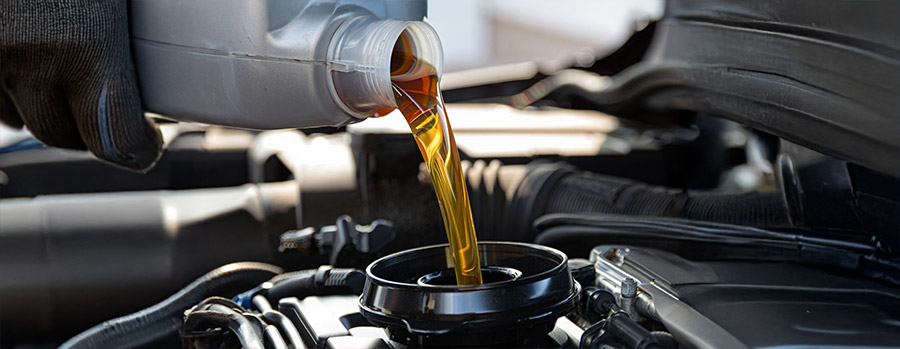
At Doherty Ford, we believe
that informed owners are the best owners. This guide is designed to provide a
deep dive into the science of lubrication, the specifics of engine oil grades,
and why a professional oil change is the gold standard for your vehicle’s
longevity.
Critical Role of Engine Oil for
Keeping the Vehicle Running
Think of your engine as the
heart of your vehicle. Inside, thousands of metal components move at incredibly
high speeds, generating immense friction and heat. Engine oil service is about
maintaining a complex chemical barrier that performs several vital functions:
· Friction Reduction: Without a microfilm of oil, metal-on-metal contact would cause your engine to weld itself shut within minutes.
· Heat Dissipation: While the radiator cools the top of the engine, oil circulates through the "bottom end," absorbing heat from the pistons, crankshaft, and bearings.
· Contaminant Suspension: Modern oil contains "dispersants" that grab microscopic soot and carbon particles, holding them in suspension so they can be trapped by the filter rather than forming sludge.
·
Corrosion Protection: Additives in the oil
neutralize acids formed during the combustion process, preventing the internal
metal surfaces from rusting or pitting.
How Often Should You Change
Your Oil?
The old "3,000-mile"
rule is a relic of the past. However, there is no one-size-fits-all answer to
how often should you change your oil. It depends entirely on your environment
and driving style.
Also driving in the Pacific
Northwest presents unique challenges. Damp winters and dusty summer trails mean
your engine is constantly fighting moisture and debris.
Most modern vehicles feature
the Intelligent Oil-Life Monitor. This isn't just a simple timer, it is
a sophisticated algorithm that tracks engine temperatures, idle time, and RPMs
to calculate exactly when the oil's chemical properties are depleted. When your
dash says "Oil Change Required," it’s time to head to Doherty Ford.
Recommended Oil Change Intervals
|
Driving Condition
|
Service Interval (Miles)
|
Service Interval (Time)
|
Recommended Oil Type
|
|
Normal (Commuting, minimal towing)
|
7,500 – 10,000
|
6 – 12 Months
|
Synthetic Blend / Full Synthetic
|
|
Severe (Towing, mountain driving, idling)
|
5,000 – 7,500
|
6 Months
|
Synthetic Blend / Full Synthetic
|
|
Extreme (Heavy towing, off-roading, plow work)
|
3,000 – 5,000
|
3 – 4 Months
|
Full Synthetic
|
|
High Mileage (Vehicles with 75k+ miles)
|
5,000
|
6 Months
|
High-Mileage Specific
|
Choosing Between Synthetic vs.
Conventional Oil
When you visit a professional
for an oil and filter change, one of the first questions service
advisors will ask is whether you prefer conventional, synthetic blend, or full
synthetic oil. Understanding the difference is key to your engine's health.
Conventional Oil
This is refined from crude oil.
While effective for older engines with simpler designs, its molecules vary in
size and shape. Under extreme heat, conventional oil molecules can break down,
leading to faster oxidation and "sludge" buildup.
Full Synthetic Oil
Full synthetic oil is
engineered in a laboratory. The molecules are uniform in size, which means they
glide over each other with much less resistance.
·
Superior Temperature Range: It remains fluid at –40 degrees
and stays stable at over 200.
·
Longevity: It resists "shearing" (the breaking down of
molecules) much longer than conventional oil.
·
EcoBoost Friendly: If you drive a modern Ford
with a turbo, full synthetic is almost always the recommended choice.
Synthetic Blend
Often called "The Best of
Both Worlds," a synthetic blend is the factory fill for most new Ford
vehicles. It provides a significant upgrade in protection over conventional oil
while remaining more budget-friendly than a full synthetic.
Engine Oil Grades Explained:
Decoding the Numbers
You’ve likely seen codes like 5W-20or 5W-30 on your oil filler cap. These are viscosity ratings established
by the Society of Automotive Engineers (SAE).
· The "W" (Winter) Number: The first number (e.g., 5W) describes how the oil flows when the engine is cold. In Forest Grove, where winter mornings can be frosty, a lower "W" number ensures that oil reaches your engine's top-end components the second you turn the key.
·
The Second Number: This represents the oil’s
"viscosity" or thickness at operating temperature.
Modern engines are built with
incredibly "tight tolerances." The gaps between moving parts are
thinner than a human hair. Using a grade like 10W-40 in an engine
designed for 5W-20 can actually prevent the oil from reaching critical
areas, leading to premature wear. At Doherty Ford, we ensure your oil
grade is a perfect match for your specific VIN.
Signs Your Vehicle Needs
Immediate Oil Change
Between your scheduled oil
change service appointments, keep an eye (and ear) out for these warning
signs:
1. Increased Engine Noise: If your engine sounds louder than usual, or if you hear a "ticking" sound upon startup, your oil may be too thin or low.
2. The "Oil Pressure" Light: This is an emergency. If this light illuminates, pull over safely and turn off the engine immediately.
3. Burning Smell: This often suggests oil is leaking onto the exhaust manifold.
4.
Dark, Gritty Oil: Pull your dipstick once a
month. If the oil looks like black coffee or feels gritty between your fingers,
it has lost its ability to protect.
Importance of the
"Filter" in an Oil and Filter Change
It is easy to focus on the oil,
but the filter is the unsung hero. A high-quality oil and filter changeutilizes high quality filters made for your specific car, which are engineered
for its oil pump flow rate.

Why does the filter matter?
· Anti-Drainback Valve: This keeps oil in the filter even when the engine is off, preventing "dry starts" that cause the most wear.
· Efficiency: High grade filters can trap particles as small as 20 microns (smaller than a grain of pollen).
·
Bypass Valve: If the filter becomes completely clogged with dirt, this
valve ensures your engine still gets oil (even if it's dirty) rather than
starving for lubrication.
Why Choose Expert Service over
a Quick Lube Shop
While there are many
"quick lube" shops in Forest Grove, they often use
"universal" parts and oils. A Ford oil change or an oil change
for any other brand at professional service offers benefits you won't find at a
generic shop:
You get expert technicians who
live and breathe cars every single day. They know exactly where to look for
potential issues, like a leaking turbo coolant line or a worn serpentine belt, that
a general mechanic might miss.
Protect Your Vehicle for the
Long Haul
Regular engine oil service is
the single most effective way to ensure your Ford reaches 100,000, 200,000, or
even 300,000 miles. By understanding engine oil grades explained, choosing
between synthetic vs conventional oil, and sticking to a strict maintenance
schedule, you are ensuring your vehicle remains safe, efficient, and powerful.
We understand that your
schedule is busy. Our express oil change lane allows you to get
factory-certified service without long wait times. You get the quality of a
dealership with the speed of a boutique shop.
Don't settle
for a generic "quick fix." Give your truck, SUV, or car the
specialized care it deserves with an oil change at Doherty Ford.
Visit us in Forest Grove today or schedule your appointment online. Our team is ready to provide the transparent, expert service that has made us a staple of the community for years.