
Transmission Repair Guide: Warning Signs, Leaks, and Maintenance Tips
Transmission Repair Guide: Warning Signs, Leaks, and Maintenance Tips
Whether you are commuting down Pacific
Avenue in Forest Grove or taking a weekend drive out toward the Oregon coast,
your vehicle’s transmission is working continuously behind the scenes.
It is responsible for transferring raw power
from your engine directly to your wheels. Yet, despite being one of the most
critical components under the hood, the transmission is often overlooked until
something goes wrong.
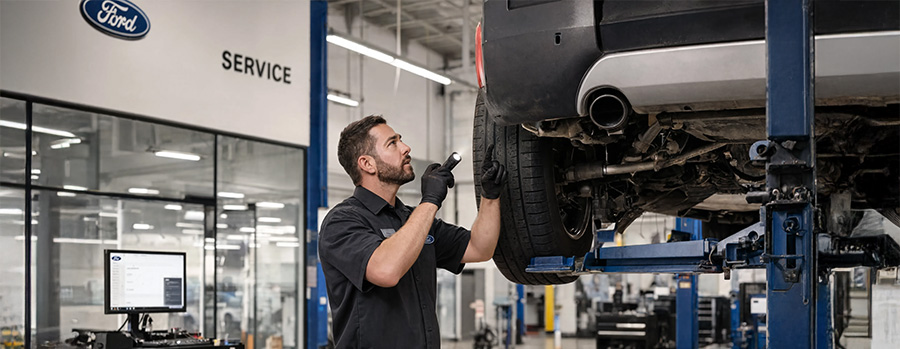
At Doherty Ford, we believe that
proactive vehicle maintenance is the key to preventing expensive breakdowns.
When your gearbox starts acting up, finding a reliable transmission shop
staffed by certified experts makes all the difference.
This guide helps you understand
different transmission technologies, address leaks to simple fluid checks
before they turn into major headaches.
Taking
Care of Your Transmission: CVT vs. Advanced Automatic
Whether your vehicle has a smooth Continuously
Variable Transmission (CVT) or a traditional Advanced Automatic, the
transmission is the most complex part of your car. It works under intense heat
and pressure to move your vehicle down the road.
However, these two systems wear out
differently. That means they need different types of care, show different
warning signs, and have very different maintenance timelines.
Maintaining
a CVT (The Belt-and-Pulley System)
Instead of physical gears, a CVT uses a
heavy-duty steel belt sliding between two smooth, cone-shaped pulleys. Because
it relies on parts sliding against each other, having fresh fluid is
absolutely critical.
·
Why it needs service: In a regular car, transmission fluid just lubricates the parts. In
a CVT, the fluid also acts like "glue" to keep the metal belt from
slipping on the smooth pulleys. If the fluid gets too old, the belt will slip,
scratch the metal, and ruin the transmission completely.
·
The Service Rule: CVT fluid breaks down fast under heat. You need to change it
strictly every 30,000 to 50,000 miles. If you skip this, a total breakdown
can cost thousands of dollars.
·
Warning Signs: Listen for a high-pitched whining noise, a weird jerk when you step
on the gas from a stop, or a feeling that the car is struggling to go up a
hill.
Maintaining
an Advanced Automatic (The Traditional Gear System)
Modern advanced automatics (like 8-speed or
10-speed systems) are packed with dozens of small interlocking gears, clutches,
and tiny computer-controlled valves.
·
Why it needs service: These transmissions are tough and built to handle heavy towing.
However, as the gears and internal clutches wear down over time, they drop tiny
metal flakes into the fluid. If you don't flush the fluid, these metal flakes
can clog the tiny passages and cause the car to shift roughly.
·
The Service Rule: The fluid inside an automatic lasts longer than a CVT. You
generally need to change it every 60,000 to 100,000 miles.
·
Warning Signs: Watch out for a loud "clunk" or hard jerk when the car
changes gears, a delay when you shift from Park to Reverse, or the engine
revving up high without the car actually moving faster.
Easy Maintenance Checklist
|
What You
Need to Know
|
Continuously
Variable Transmission (CVT)
|
Advanced
Automatic
|
|
What wears
out first?
|
The steel belt
can stretch or slip.
|
Internal
clutches wear down and clog fluid paths.
|
|
How often to
change fluid?
|
Strictly every 30,000 to 50,000 miles.
|
Every 60,000 to
100,000 miles.
|
|
What happens
if neglected?
|
The belt snaps,
requiring a whole new transmission.
|
Gears start
slipping, which can often be repaired.
|
Recognizing Major Symptoms That Require Transmission
Repair
If you miss the early warning signs of
low fluid or minor leaks, your car will eventually show physical symptoms of
mechanical distress. If your vehicle exhibits any of the following behaviors,
you should seek professional transmission repair immediately:
·
Slipping Gears: If your engine revs up loudly but your car doesn't accelerate
proportionally, or if the vehicle spontaneously drops out of gear while
driving, your internal clutches or bands are slipping.
·
Harsh or Delayed Shifts: Experiencing a sudden clunk, jerk, or hesitation when shifting from
Park into Drive, or during gear transitions on the road, indicates internal
hydraulic or mechanical friction.
·
Strange Noises: Manual gearboxes often emit a harsh grinding noise when failing.
Automatic systems are more likely to produce a distinct whining, humming, or
buzzing sound that changes in pitch with vehicle speed.
·
Burning Odor: A sweet yet acrid burning smell entering the cabin suggests your
transmission fluid is actively overheating, meaning it can no longer protect
the moving components inside.
How to Fix a Transmission Fluid Leak
Finding a fresh puddle under your
vehicle on a crisp Oregon morning is always stressful. If you spot a bright
red, pink, or reddish-brown fluid leaking near the center or front of your car,
you are likely dealing with a transmission leak. Operating a vehicle with
critically low fluid can destroy internal components within miles.
If you catch the issue early, here is
how automotive experts diagnose and fix a transmission fluid leak:
Step 1: Identify the Source
Transmission fluid can escape from a
few common weak points:
·
The Transmission Pan Gasket: Over time, the rubber or cork gasket sealing the bottom fluid pan
degrades due to heat cycles and begins to weep fluid.
·
Fluid Lines: Metal cooler lines run between your transmission and the radiator to
keep the fluid cool. These lines can rust or crack over time.
·
Axle/Output Shaft Seals: Rubber seals prevent fluid from leaking out where the drive axles
connect to the transmission. If these dry out or warp, fluid will drip down the
sides of the housing.
Step 2: The Repair Process
Depending on where the leak originates,
the repair process varies in complexity:
·
Replacing the Gasket: If the leak is isolated to the fluid pan, the solution involves
draining the fluid, dropping the pan, scraping clean the mating surfaces,
installing a brand-new high-quality gasket, and torquing the bolts back down to
exact factory specifications.
·
Replacing Cooler Lines: Damaged lines must be disconnected and replaced with new assemblies to
ensure pressurized fluid remains entirely sealed.
·
Swapping Seals: Fixing a worn output shaft seal involves removing the axle, extracting
the old rubber seal with specialized tools, carefully seating a new seal, and
reinstalling the drivetrain components.
How to Check Transmission Fluid
Keeping an eye on your transmission
fluid is the single easiest way to extend the lifespan of your gearbox.
Transmission fluid cools, cleans, and lubricates the internal gears and
clutches. If it runs low or becomes contaminated, friction increases, leading
to overheating and component failure.
Here is a quick guide on how to check
transmission fluid using a traditional dipstick system:
·
Park on Level Ground: Ensure your vehicle is parked on a flat, level surface in your driveway
or garage.
·
Warm Up the Engine: Unlike engine oil, transmission fluid expands when warm. Let your car
idle for a few minutes or take a short drive around Forest Grove to bring it up
to normal operating temperature. Keep the car in "Park" with the
parking brake engaged.
·
Locate the Transmission Dipstick: Pop the hood. On front-wheel-drive vehicles, the transmission dipstick
is usually located near the front or side of the engine transaxle. On
rear-wheel-drive vehicles, it is typically located near the back of the engine
bay, closer to the windshield.
·
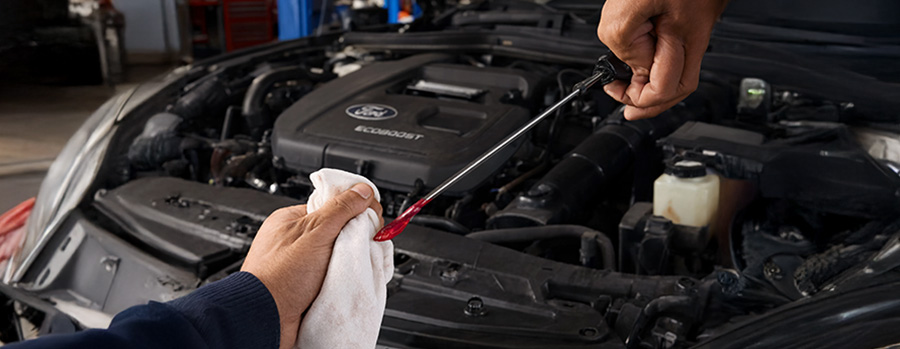
Pull and Clean: Pull the dipstick out completely, wipe it clean with a lint-free rag,
reinsert it fully, and pull it back out again.
·
Analyze the Fluid Level: Look at the markings at the tip of the dipstick. The fluid level should
fall securely between the "Warm," "Full," or
"Hot" crosshatch lines. If it sits below the minimum line, you need a
top-off.
·
Check Fluid Condition: Drop a bit of the fluid onto a white paper towel. Healthy fluid is
translucent and has a distinct pinkish-red hue. If it appears dark brown,
black, thick, or smells distinctly burnt, it has degraded and requires
immediate replacement.
Many newer Ford models feature
"sealed" transmissions that lack a traditional under-hood dipstick
altogether. For these systems, checking the fluid level requires a vehicle lift
and specialized tools. If your vehicle doesn't have a dipstick, scheduling a
professional checkup at a local service center is the safest route.
Your Local Drivetrain Experts in Forest Grove
Your vehicle's transmission is an
incredibly complex piece of machinery featuring hundreds of moving parts,
delicate hydraulic pathways, and sensitive electronic solenoids. Don't leave
its care up to chance or cut corners with generic quick-lube locations.
If you suspect a leak, notice a
dashboard warning light, or simply need your regular mileage interval
inspection, bring your vehicle down to Doherty Ford. Located
conveniently at 4223 Pacific Ave in Forest Grove, OR, our certified
automotive service technicians are fully equipped to handle everything from
precision fluid flushes to advanced mechanical diagnostics.
Stop by our shop or schedule your
transmission service appointment online today to keep your car driving smoothly
through Washington County and beyond!