15 September 2026Modern Ford vehicles are equipped with
technology designed to make everyday driving more confident and convenient.
From helping you stay in your lane to monitoring vehicles around you,
driver-assistance features can provide valuable support behind the wheel.
But these systems depend on cameras,
radar sensors, and other components working together accurately.
If a warning appears on your dashboard,
your windshield has recently been replaced, or your Ford has been involved in a
collision, it may be time to have these systems inspected. In some cases, your
vehicle may require Ford sensor calibration or Ford camera calibration to help
ensure its driver-assistance technology is functioning as intended.
At Doherty Ford, we strive to make
service easy and effortless. If something does not seem right with your Ford's
driver-assist technology, professional Ford ADAS service can help
identify the issue and determine the appropriate next step.
What Does ADAS Do in Your Ford?
ADAS, or Advanced Driver Assistance
Systems, refers to technology that uses cameras, radar sensors, and other
components to monitor your surroundings and provide assistance while driving.
Depending on the Ford model and
equipment, these systems can include features such as Pre-Collision Assist,
Adaptive Cruise Control, Lane-Keeping System, Blind Spot Information System,
Rear Cross-Traffic Alert, and other driver-assistance technologies.
These features can be particularly
helpful during everyday driving around Forest Grove, whether you are navigating
local streets, commuting through Washington County, or heading out on a longer
trip.
However, driver-assistance technology can
only work with the information provided by its sensors and cameras.
If a camera is incorrectly positioned or
a sensor has been moved, the vehicle may not interpret its surroundings as
accurately as it should. That makes proper Ford safety system service an
important part of maintaining today's advanced vehicles.
When Should You Have Your Ford's Cameras and Sensors Checked?
Unlike an oil change or tire rotation,
ADAS calibration is not necessarily something your Ford needs at a specific
mileage interval.
Instead, calibration or inspection may
become necessary after certain repairs, damage, or changes to components
connected to the driver-assistance system.
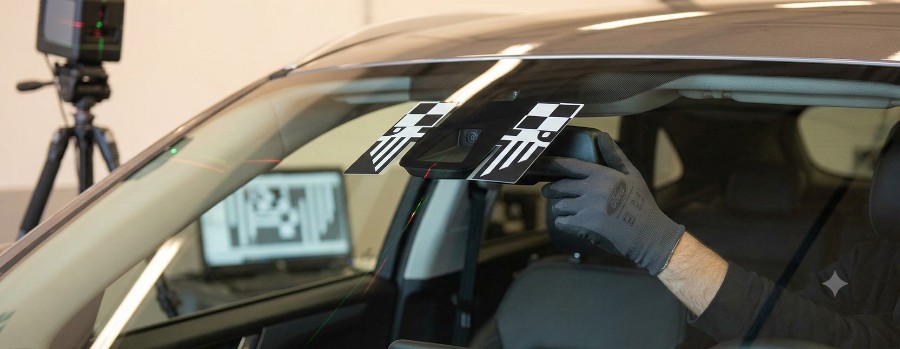
A windshield replacement is one example.
Some Ford models use cameras positioned
near the windshield to support driver-assistance functions. If the windshield
is replaced, the camera system may need to be checked and calibrated according
to the vehicle's requirements.
A collision is another important reason
to have these systems inspected.
Sensors may be positioned behind or
around bumpers, grilles, and other body components. An impact that appears
relatively minor may still affect the position of a sensor or its mounting
hardware.
Other situations that may call for an
inspection include suspension or wheel-alignment work, repairs near sensor
mounting locations, or persistent driver-assistance warnings.
Signs Your Ford's Driver-Assist System May Need Service
Driver-assistance technology is designed
to work in the background, so you may not notice anything is wrong until the
vehicle alerts you.
A warning message does not automatically
mean that a camera or sensor has failed. However, persistent warnings or
noticeable changes in system operation are worth investigating.
Watch for signs such as:
1.
Driver-assistance warning
messages: Your Ford may display a message stating
that a safety or driver-assistance feature is unavailable, limited, or requires
attention.
2.
A normally available
feature stops working: If a system you
regularly use suddenly becomes unavailable, it may require diagnosis.
3.
Unexpected system
behavior: Changes in how lane-keeping, adaptive
cruise control, collision alerts, or other assistance features respond should
not be ignored.
4.
Recent windshield
replacement: If your Ford uses a windshield-mounted
camera, work involving the glass may require a calibration procedure.
5.
Recent collision or
front-end repair: An impact can affect sensors or their
mounting points even when the visible damage appears minor.
The important thing is to have the system
properly diagnosed rather than assuming calibration is automatically required.
What Happens During Ford Camera Calibration?
A camera used by a driver-assistance
system needs to be positioned correctly so the vehicle's computer can
accurately interpret the information it receives.
Ford camera calibration helps ensure that the camera system is correctly aligned
according to the requirements for your specific vehicle.
The process can vary depending on the
Ford model and the systems installed. It may involve specialized equipment,
measurements, diagnostic procedures, and specific operating conditions.
This is more precise than simply
repositioning a camera until it appears to be facing the road correctly.
Consider the camera as one of the
vehicle's sources of information. It helps the system recognize things such as
lane markings, vehicles, and other objects. If its position is incorrect, the
information being provided to the vehicle may also be affected.
Proper calibration helps the system
interpret that information correctly.
Understanding Ford Sensor Calibration
Cameras are not the only components
involved in modern driver-assistance systems.
Many Ford vehicles also use radar sensors
and other technology to monitor the area around the vehicle. These components
can help systems determine the position, distance, or movement of nearby
vehicles and objects.
Ford sensor calibration helps ensure that the relevant sensors are properly aligned
and operating with the vehicle's electronic systems.
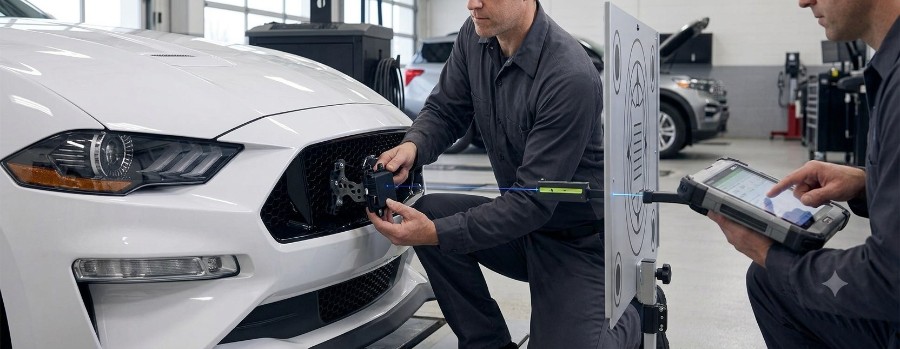
For example, radar sensors can play an
important role in systems that monitor traffic ahead. If a sensor or its
mounting position is affected during a collision or repair, the system may
require additional inspection or calibration.
This is why a repair involving a bumper
or another sensor location may require more than replacing the visible damaged
part.
Why ADAS Calibration Is Important After a Collision
After an accident, it is natural to focus
on the damage you can see.
A dented bumper, damaged grille,
scratched paint, or broken headlamp is easy to identify. But modern Ford
vehicles can also have sensors and other technology positioned behind or around
these components.
That means a vehicle can appear repaired
on the outside while still requiring attention to its driver-assistance
systems.
This is particularly important when
considering Ford collision sensor calibration after an accident or
repair involving areas where sensors are located.
Proper Ford driver assist repairis about more than getting a warning message to disappear. The vehicle's
systems should be inspected to determine why the warning occurred and whether
any components require repair or calibration.
Does Every ADAS Warning Mean Calibration Is Required?
No.
A warning from a driver-assistance system
can have several possible causes. A camera or sensor may be temporarily unable
to operate because of an obstruction or other conditions, or there may be an
underlying electrical, software, component, or alignment issue.
That is why it is better to diagnose the
problem than immediately assume that calibration is necessary.
A technician can determine which system
is reporting the issue and identify the appropriate repair. Depending on the
situation, the solution could involve cleaning an area, repairing a component,
performing a diagnostic procedure, or carrying out the required calibration.
The goal is to address the actual cause
rather than simply treating the warning message.
Get Your Ford's Driver-Assist Technology Checked
Driver-assistance technology is designed
to support you while you drive. When everything is operating correctly, you may
rarely think about the cameras and sensors working behind the scenes.
But if your Ford has recently been
involved in a collision, had windshield work, undergone repairs around a
sensor, or started displaying an ADAS warning, it is worth having the system
inspected.
Whether your Ford requires Ford camera
calibration, Ford sensor calibration, diagnosis, or another form of Ford safety
system service, addressing the issue can help ensure your vehicle's technology
is operating as intended.
If you are in Forest Grove or the
surrounding area and have questions about your Ford's driver-assistance
systems, contact Doherty Ford's service team. We're here to help make Ford
service straightforward, convenient, and effortless.